
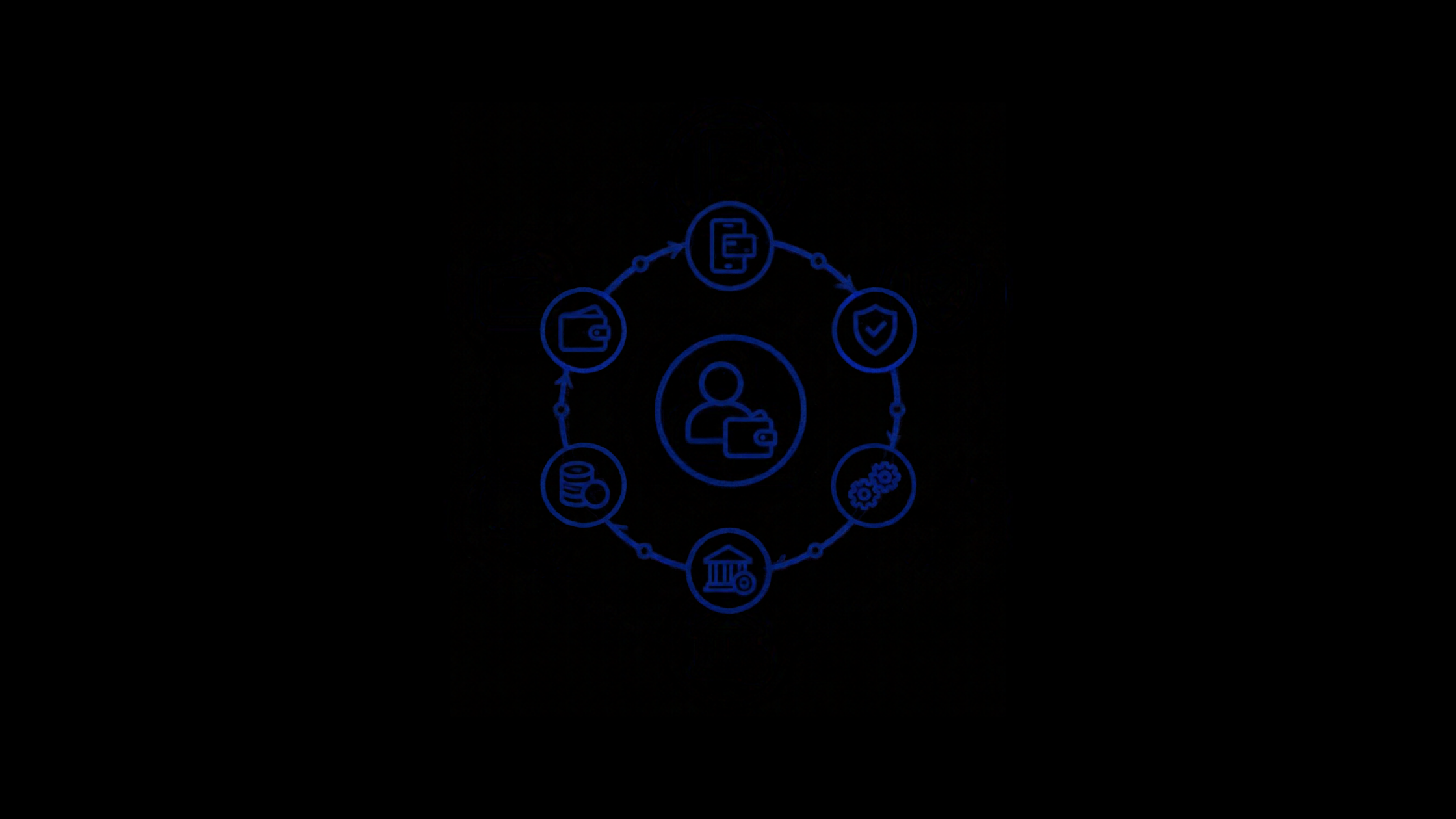
You fill your basket, type in your card details and click Pay. Moments later the page says Approved and a confirmation email lands in your inbox. It feels instant, though banks, card networks and software have been busy behind the scenes. We'll follow the payment step by step until the merchant gets paid, with a modern gateway such as PayTrust sitting in the middle to secure, route and report on the flow.
Six players take part in a card payment, and the list below follows the order the request travels.
With the cast introduced, the journey starts at checkout, where the customer enters card details or picks a digital wallet. PayTrust supports both, plus alternative payment methods, and encrypts the details straight away so nobody can read them in transit.
PayTrust can also tokenise the card number, swapping it for a random substitute that works only in one context and makes recurring payments easier. Anyone who intercepts a token gets nothing useful, and the merchant's systems no longer hold the real number, which shrinks their PCI DSS obligations. Visa's figures suggest fraud on payments made without the physical card falls by around a quarter on average, and by as much as 40 per cent for tokenised transactions.
Once the details are protected, the gateway sends an authorization request through the acquirer and card network to the issuer. The issuer checks for enough money or credit and looks for anything unusual, such as rapid purchases or an unexpected location.
The gateway adds its own checks, including risk scoring, device fingerprinting and 3D Secure, an extra identity check that may ask the customer to confirm in their banking app. The answer then travels back along the same chain as an approval, a decline or a challenge.
Approval rates shift with geography, card type, issuing bank and even the time of day, and a single payment path hides those differences. Smart routing sends each transaction to the provider most likely to say yes at that moment.
A June 2026 study from PYMNTS Intelligence and Spreedly found that companies with a full set of orchestration tools were roughly 11 times more likely to top 97 per cent approval than those with only one or two. Yuno's 2026 data adds that enterprise merchants routing across several acquirers gain around 8 per cent more approvals on average, and a fallback route for temporary declines wins back about the same again.
Once a payment is approved, the funds are reserved on the customer's card and the merchant can get on with the order. For an online shop selling physical goods, collection follows when the order ships, triggered by a capture request through the gateway.
The acquirer and card network then move the money from the issuer to the merchant's account, which is called settlement. The customer sees Approved straight away, yet settlement takes one to three business days. Meanwhile the gateway supplies batch settlement files, dashboards and exports so finance teams can match sales to payouts.
Once the money lands, the PayTrust dashboard lets the merchant follow transaction status, fees and settlement reports, and issue full or partial refunds from the same screen. If a customer goes to their bank and disputes the charge instead, a chargeback travels back through the network and acquirer to the merchant. The transaction records and logs held in PayTrust then serve as evidence for the merchant's response.
Across that journey, PayTrust adds four things.

