
Merchants often talk about payment gateways and payment orchestration as if they are the same thing. They solve different problems. A gateway mostly moves payment details between the merchant, the processor and the bank. Orchestration sits a level above that, coordinating several providers, methods, rules and workflows at once. Knowing where one stops and the other starts makes it easier to pick the right setup rather than the trendier label.
A payment gateway collects a customer's card details securely and sends them off for approval. A customer types in their details, the gateway encrypts that information and passes it along, the payment goes off for authorisation, and the merchant gets an approval or a decline moments later.
Gateways handle a handful of jobs well. Card payments, basic security checks, confirmations and simple reporting all sit comfortably within one. A small business running through a single processor with a limited set of payment methods can often get everything it needs from a gateway alone.
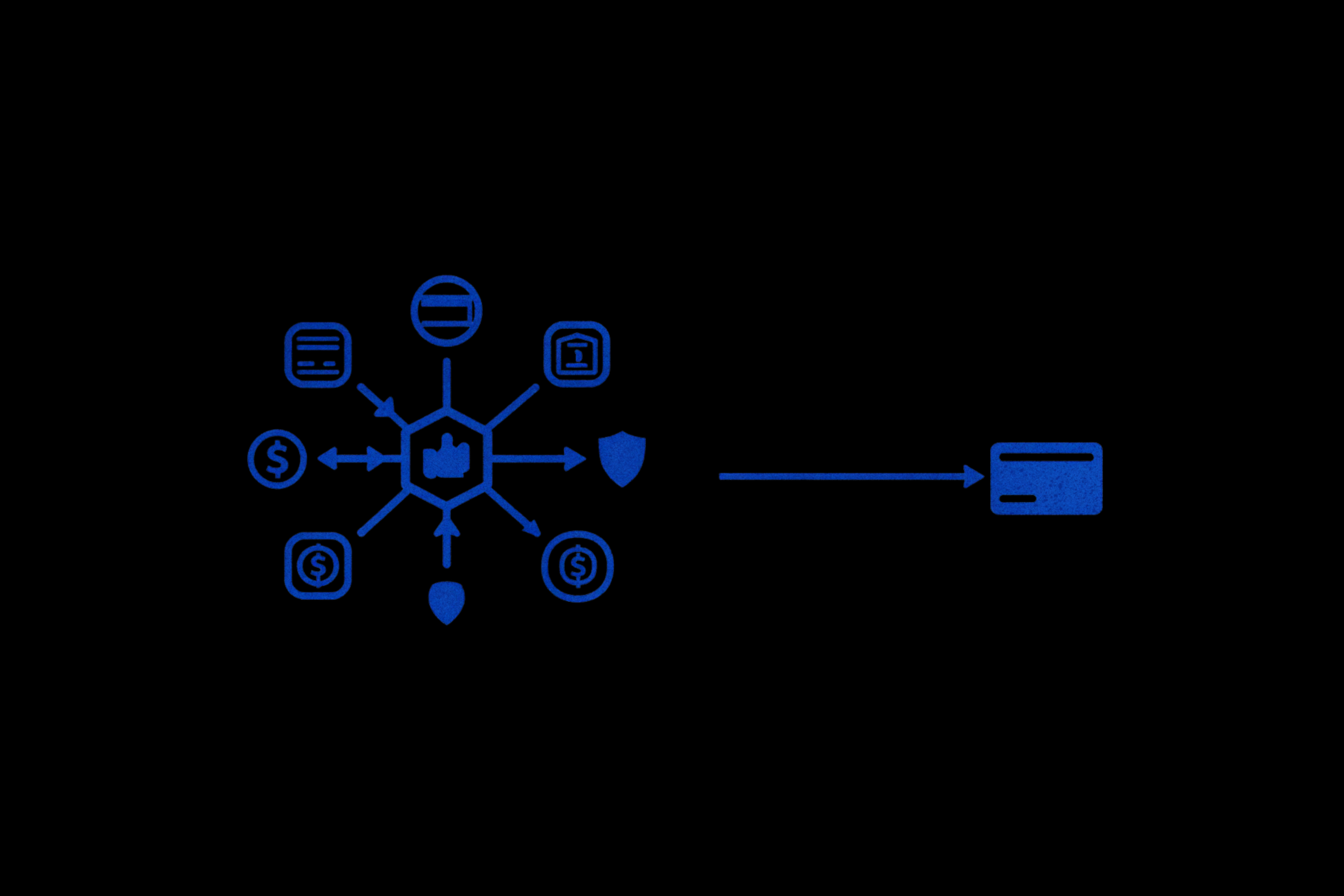
Payment orchestration works a level higher, sitting above the individual providers and coordinating how payments move through them. Rather than plugging into one processor, it connects a merchant to several payment service providers, acquirers, card networks, digital wallets and local payment methods, all through one system, managing the journey from checkout through to authorisation, settlement, reporting and reconciliation.
Think of a gateway as a single road between two points. Orchestration is the system deciding which road to take, and rerouting the moment one gets blocked.
The practical differences show up in a handful of places. A gateway usually ties a merchant to one processor, while orchestration keeps several running at once. Routing on a gateway tends to stay fixed, whereas orchestration applies rules that weigh cost, location and performance before sending a payment anywhere. A gateway supports a set list of payment methods, while orchestration brings cards, wallets, bank payments and local options together under one roof. When a payment fails, a gateway simply returns a decline, but orchestration can retry it, fall back to another provider or cascade it along until something works. Reporting on a gateway stays limited to its own activity, while orchestration pulls data together across every provider involved. Growing into new markets usually means new integrations with a gateway, whereas orchestration keeps everything centralised as the business expands.
Capabilities vary a fair bit from provider to provider, so this is more a general shape than a strict rulebook.
Once a merchant starts operating across a few markets, orchestration tends to earn its keep. Spreading payments across more than one acquirer usually nudges acceptance rates up, and showing shoppers a local payment method they actually recognise at checkout does more for conversion than people expect. Providers running these platforms have reported approval rates climbing by a noticeable margin after switching over, and how much of a lift a merchant sees depends heavily on the markets and payment mix involved.
Cascading is where this becomes practical rather than theoretical. If a payment fails for a temporary technical reason, the system can quietly send it to another approved provider instead of losing the sale outright, all within rules agreed with the provider beforehand.
Tokenisation tends to travel alongside routing rather than sit apart from it. Swapping stored card numbers for network tokens has been linked to fewer declines and less fraud at the same time, and layering smart routing on top tends to add a bit more on both counts. None of these gains arrive automatically. They come from providers measuring their own rollouts, and actual results depend on a merchant's volume, markets and existing fraud setup.
A gateway tends to suit a business working in one market, on one processor, with a small set of payment methods and fairly steady volume.
Orchestration tends to suit a business spread across countries, working with several processors or acquirers, running subscriptions, or wanting routing, cascading and reporting pulled into one place.
Looking honestly at where the business actually sits, rather than reaching for whichever label sounds more advanced, leads to a better decision.
PayTrust works as a payment infrastructure partner built for more than basic transaction acceptance, covering multiple payment methods, routing and cascading, fraud detection, tokenisation, recurring payments, reporting and integrations. The full orchestration layer will not suit every merchant. It sits ready for the ones whose needs have outgrown a single gateway.
A gateway processes a payment. Orchestration manages the wider payment ecosystem around it. The right choice comes down to the markets a business serves, the payment methods and providers it needs, and how much flexibility it wants built in.

